How to Host a Civil Debate Night in Your Local Pub
October 10, 2026 - Culture


October 10, 2026 - Culture
October 04, 2026 - Media

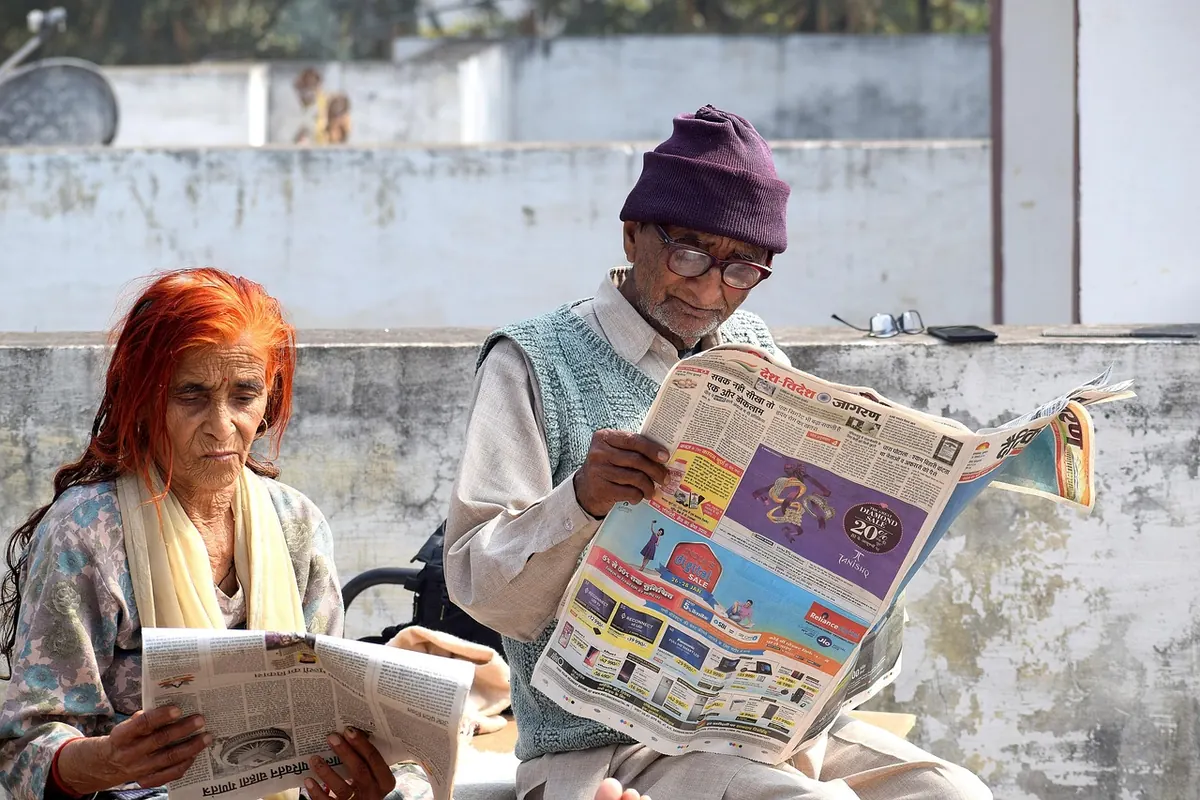
Sharing a story takes two seconds. Reading it with any care takes two minutes. That gap — between the reflex and the reading — is where most bad information travels. Not through elaborate forgeries, usually, but through real reporting stripped of context, dressed in a headline and dropped into a group chat.
There is no shortage of people telling you which outlets to trust. Trusting a logo is a shortcut, and it fails in both directions: good papers have bad days, and outlets you dislike occasionally get it right. A routine works better — twelve questions, applied to everything, especially the stories you are delighted to see.
Naming matters more than most readers realise. Anonymity has legitimate uses: a whistleblower who would lose their job, a witness to a crime, a source in a country where speaking openly is dangerous. But a story resting entirely on unnamed sources is a claim to hold at arm's length. Ask how many there are, whether they corroborate each other or simply repeat the same briefing, and whether the outlet explains why they cannot be named.
If a report is cited, find the report. Most are published, and the summary in paragraph two is often narrower than the finding. "A study suggests" can cover anything from a large trial to a small online poll, and the difference matters if you are about to repeat it as fact.
Ask too whether you are reading journalism or a rewrite. A great deal of local, trade and business news begins life as a press release. That is not automatically dishonest, but the framing is someone's communications strategy, complete with the quotes they wanted you to see. Court reporting works the same way: the ruling is usually available, and it frequently says something more careful than the coverage does.
Two headlines can describe one event and leave you with opposite feelings. The same council vote becomes "Council backs £40m regeneration plan" or "Council spends £40m while libraries close". Both sentences can be accurate. Only one of them is trying to make you angry.
Watch for passive constructions that remove the actor: "three people were killed" tells you less than "police shot three people" where the second is accurate. Watch for nouns carrying a verdict — clashes, chaos, burden, crackdown, u-turn. None is neutral, and none is necessarily wrong, but you should notice it.
Check who gets to speak. A story can quote six critics and describe supporters only in the third person, or the reverse. One piece proves little; a pattern across several is worth naming. Question headlines deserve suspicion too. "Is Britain broken?" asks nothing and plants everything, as does "concerns have been raised" or "critics claim" — vague attribution is how an opinion gets printed without anyone owning it.
The most common problem with a shared story is not that it is false. It is that it is incomplete.
Ask whether the same outlet covered the same subject a month ago with a different emphasis. Papers are entitled to report new evidence that contradicts an earlier line, but they should say so. When yesterday's certainty becomes today's silence, remember it.
Every outlet has a shape. Some are owned by a proprietor with commercial interests, some by a trust, some funded by members, some by a licence fee. None of that automatically corrupts the reporting, but all of it is information worth holding while you read.
Think tanks and campaign groups are often described as though they were simply researchers. Many do real research; most also have a position. Look at who funds them and what they exist to argue for — that applies to organisations whose conclusions you welcome as much as to those you don't.
Be sceptical of balance theatre: two loud opposites, no attempt to establish what is actually known. And notice when one side's claims are reported as facts while the other side's are reported as claims.
Statistics are the simplest part of journalism to check and the easiest to mangle. A few traps:
Pictures deserve the same treatment. Library images, archive footage and stock photographs appear under current headlines constantly, and a tight crop can tell the opposite story to the wide shot. Look for a date and a caption credit.
One caution that sits outside media literacy: if a story touches on your health, your money or a legal problem, treat it as a prompt to ask a qualified professional rather than as advice. Reporting summarises; it cannot know your circumstances.
Run them in order and you will usually stop at two or three. Most weak stories fail early: no named source, no link to the underlying document, a headline the text does not support.
Two habits make the list stick. Apply it first to something you agree with, where your guard is lowest and the exercise teaches you most. And when you cannot verify something, say so — "I haven't checked this" is a perfectly respectable caption for a link, and better than the alternative.
Then check the date. Old stories come round again every few months, usually with the original year quietly missing. None of this will make you right every time. It will make you slower to share, which is most of the battle.
Photo: Kübra Şeref / Pexels
A practical guide to running a respectful, well-moderated community debate in your local pub, from choosing a fair...
A practical pre-signing guide for UK renters on deposits, fees, repairs and eviction rules, with the differences...
October 10, 2026 - Culture
October 04, 2026 - Media
Copyright © 2026 Folly Stand. All Right Reserved.