How to Host a Civil Debate Night in Your Local Pub
October 10, 2026 - Culture

October 10, 2026 - Culture

October 04, 2026 - Media
A good argument in a pub is one of the great British pleasures. A bad one — two blokes, one table, rising volume, nobody listening — is why most of us keep our opinions to ourselves. The difference between the two is rarely the topic. It is the structure.
A civil debate night takes a few evenings to organise, one firm moderator, and a landlord who does not mind a bit of noise on a Tuesday. Get those three things right and a corner of your local becomes the best conversation in town.
Start with the motion, not the guest list. A useful debate question is one where reasonable people can disagree and both sides have something to say beyond insults. Phrase it as a proposition: this house believes the high street is better off without chain shops, or this house believes phones should be off during the school day.
Three tests before you commit:
Avoid topics where the "debate" is really about whether a group of people deserves to exist in peace. Those nights damage a room and nobody learns anything. Save the fury for the football.
You do not need a formal debating society. Three formats work well in a pub back room, and you can rotate them month to month.
Two speakers on each side, five minutes each, then the floor opens for forty minutes. Best for a big issue and a big crowd.
Ten to fourteen people, seated so everyone can see everyone. Each person gets two minutes to state a position before anyone responds. Best for a topic where you want to hear from people who rarely speak first.
Four chairs in the middle, one left empty. Anyone in the room can take the empty chair to join; when someone else wants in, one of the four steps out. It sounds gimmicky and it works, particularly with a mixed-age crowd.
Whichever you choose, keep the whole thing to ninety minutes including a break. Enthusiasm outlives attention, and a night that ends while people are still talking gets a second date.
Rules agreed in advance are not an insult to your neighbours; they are what lets people speak freely. Print them, pin them up, and read them aloud at the start of every single meeting. Repetition is not condescension.
The moderator does not need to be neutral about the subject. They need to be even-handed about airtime, which is a different and harder job. Their tasks are simple to list and difficult to do: hold the clock, protect the quiet, redirect the loud, and summarise both sides fairly at the end of each section.
The dominator has a point, and eleven more. Thank them warmly, park them — "I'm going to hold you there and come back to you last" — and genuinely come back last.
The heckler wants an audience, not a debate. Name the behaviour once, not the person: "We're not doing comments from the floor while someone's speaking." Then move on. Do not negotiate.
The fact-dumper has read something and wants to read all of it. Ask for one point in one sentence. If it matters, offer to check it together after the break.
When the room heats up, slow everything down. Drop your own voice and others follow. If a point turns personal, stop it, restate the question, and hand the floor to someone who has not spoken.
A line worth having ready: "That's a claim, not an argument. Give me the argument."
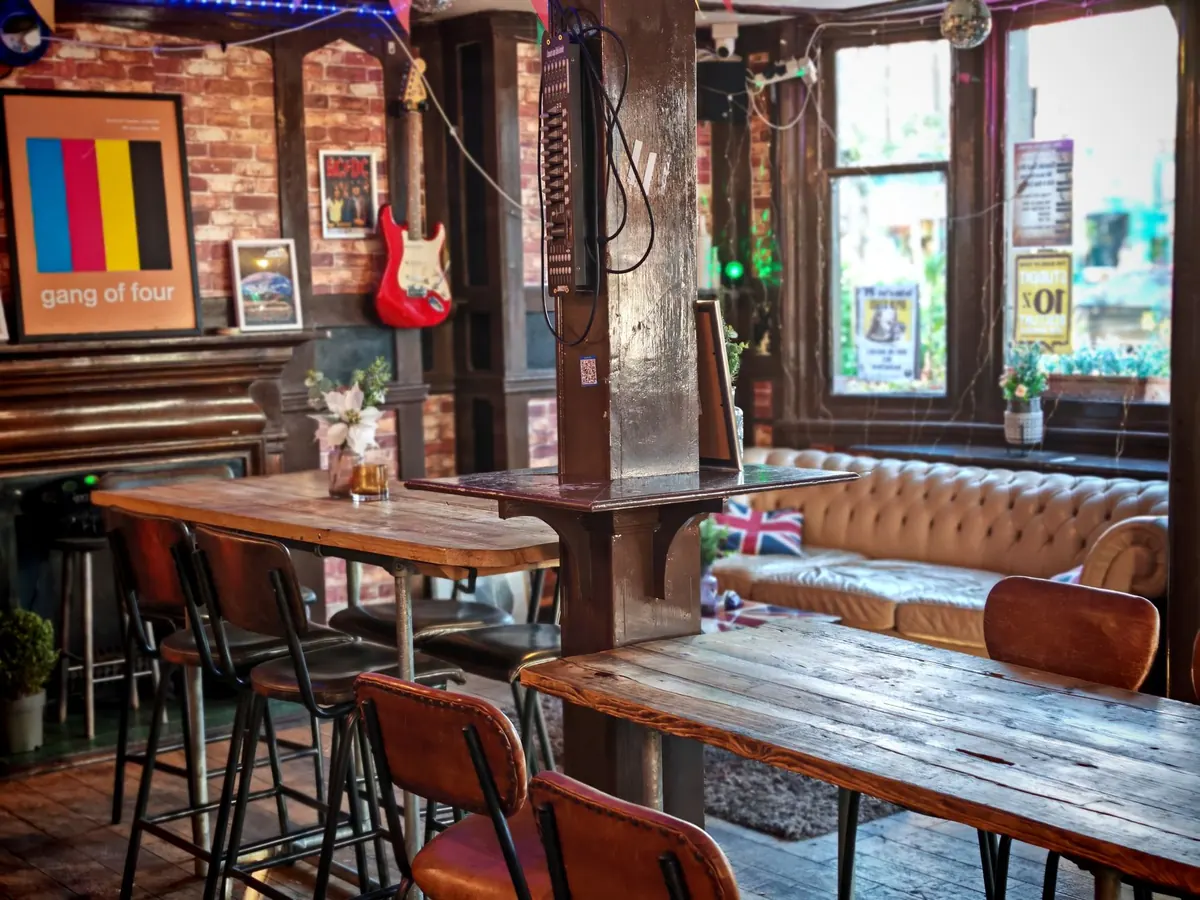
Talk to the landlord before you invite anybody. Ask for a midweek evening, a back room, no music and no television. A quiet Tuesday or Wednesday beats a Friday every time, and it is easier to ask for.
Arrange the tables so people can see each other — a rough circle or a horseshoe. Start on time, finish on time, and make sure the pub sells some beer: order food, run a whip-round for the room, and thank the staff out loud at the end.
Invite widely but personally. A notice in the pub, a post in the local community group and a line in the parish newsletter will reach some people; a direct message to the six neighbours who always have something to say will reach the rest. Cap the first night at twenty-five. A full small room feels better than a half-empty large one.
Then book the same slot for next month before you leave. A debate night becomes a habit only if the second one is already in the diary — and a habit, not a one-off, is what turns a pub back room into a place where a town can think out loud.
Photo: George Morina / Pexels
A practical pre-signing guide for UK renters on deposits, fees, repairs and eviction rules, with the differences...
A practical January checklist for auditing what you read, cutting rage-bait, widening your sources and setting...
October 10, 2026 - Culture
October 04, 2026 - Media
Copyright © 2026 Folly Stand. All Right Reserved.